

I study how reform school facilities shape daily life and interaction
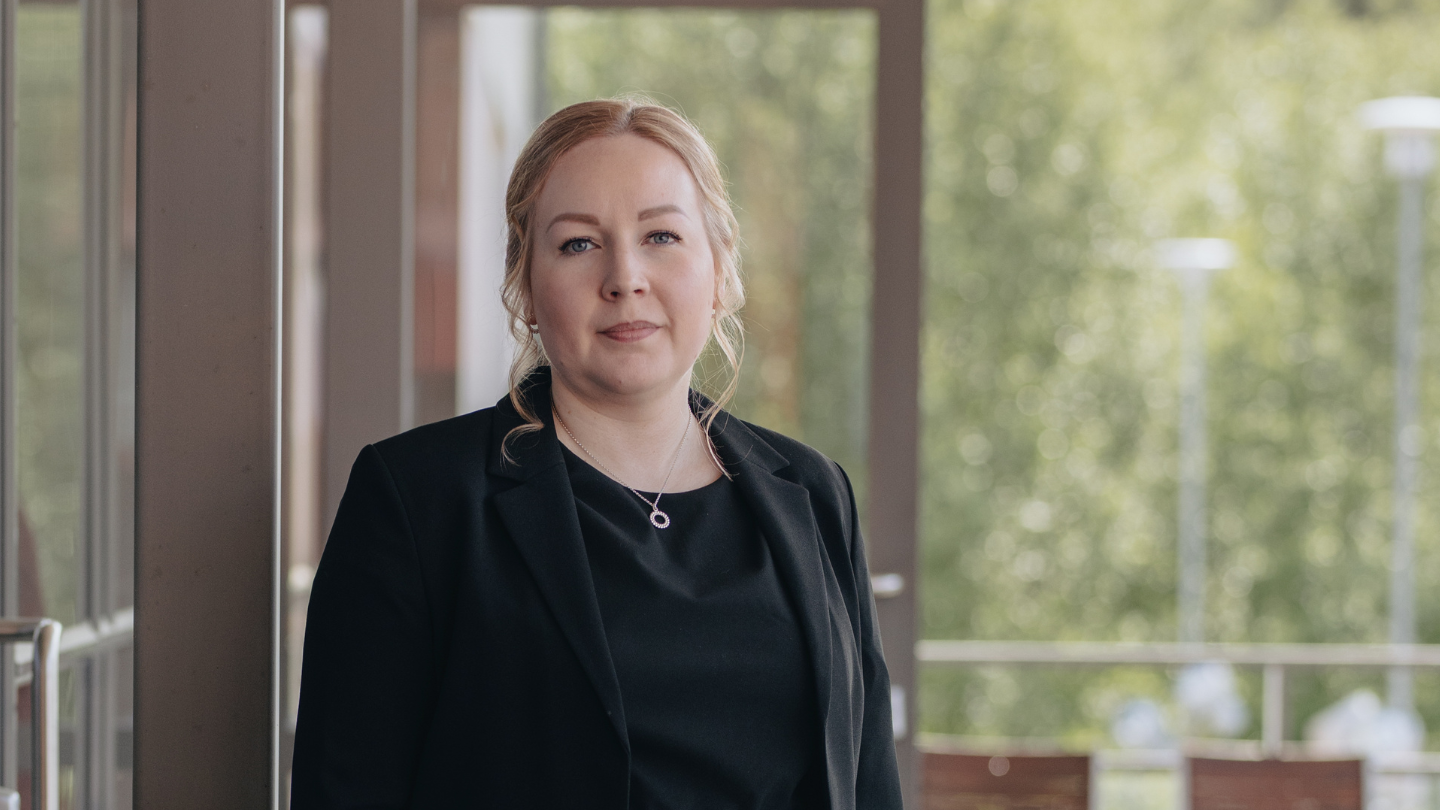
The series Research in the Spotlight allows researchers from Kokkola University Consortium Chydenius to discuss their current research activities.
Mira Välimaa, DSocSc, works as a university teacher in the Unit for Social Sciences at the Kokkola University Consortium Chydenius.
New environment shapes care and educational work
My research examines the relocation of a reform school to new, purpose-built facilities and their significance for care and educational work from the perspective of the school’s staff. Reform schools are units for demanding foster care, and they are often the last resort for young people.
A focus of my research is how the staff describes the new environment from the perspective of care, education and safety. The goal is to understand how facilities shape daily life and the interaction between people. The study is based on the conception that the environment is not merely a backdrop, but an active agent: spaces, objects, and power relations are intertwined and influence everyday life and relationships.
A home-like environment, safety and privacy as the building blocks of daily life
According to my preliminary findings, the residential units of the reform school emphasise a home-like atmosphere and everyday life. Shared spaces, such as the kitchen and living room, facilitate socialising and other everyday communal activities. This atmosphere also makes the presence of adults feel natural, which is important in relationship-based work.
Safety is built partly through spatial solutions. Monitoring is largely integrated into the environment using, for example, surveillance systems, which reduces the need for continuous physical presence.
At the same time, the individual needs of adolescents and their right to privacy are highlighted. Private rooms with their own bathrooms promote privacy, but they also create other issues. Good soundproofing, for example, protects privacy but can make it harder for staff to detect problems in time.
Research supports the development of reform schools and the everyday life of adolescents
My research provides information on what kind of facility solutions support safe everyday life, the work of reform school staff, a home-like atmosphere, and the privacy of adolescents. The results will help to in the design and development of the physical environments of reform schools in both new and existing units.
From the adolescents’ perspective, my research emphasises that a reform school is not only a place of care but also an environment for daily life. The facilities should therefore enable an everyday life that is as normal and home-like as possible, even for demanding foster care.
More broadly, the results are related to the quality of foster care and the realization of children’s rights: the goal is to ensure a safe, respectful and rehabilitative everyday life for young people.
Up-to-date information to support foster care reform
Child welfare legislation is currently being reformed, and efforts are being made to strengthen the measures available to foster care. This is a question of a last-resort service, in which adolescents’ movement and communication may be restricted but with the aim of providing protection and rehabilitation at the same time. This makes research on reform schools especially timely.
My research provides concrete information on how such facilities affect daily life and care and educational work. It can promote understanding of how safety can be supported so that everyday life is not based only on surveillance, and how it is possible to ensure the adolescents’ privacy, participation and confidential relationships.
The results support practical development work and broader discussions about the types of environments that should be created for children and adolescents in the most vulnerable situations.


